Where to Stay in Italy: Should You Book a Hotel or a Home Rental?
Once you've picked your regions and mapped out your route (if you haven't yet, start with my post on planning your first trip to Italy), the very next question is almost always the same: where are we actually going to sleep?
And this is where a lot of people get stuck, because figuring out where to stay in Italy usually comes down to two very different options. On one side, a hotel with a front desk, breakfast waiting for you every morning, and someone to make your bed. On the other, a home rental with a kitchen, a washing machine, and a terrace where you can drink your coffee in your pajamas. Both can be wonderful. Both can also go sideways if they don't fit the trip you're taking.

Standing on the patio of our home rental in Sorrento, overlooking Mt. Vesuvius
Why Choose a Hotel in Italy
Hotels are the easy button, and there's no shame in that. When you're moving between cities every three or four nights, having everything handled for you makes a bigger difference than you might think.
What I love about hotels:
Someone to help you: a concierge that can book a dinner reservation or make personal recommendations, call you a taxi, hold your luggage after checkout, or point you toward a pharmacy at 9:00 at night.
Breakfast is handled: most Italian hotels include breakfast, which means one less decision before you've had your cappuccino.
Great locations: in cities like Rome, Florence, and Venice, many hotels sit right in the historic center, so you can walk almost everywhere.
Flexibility: hotels are happy to book a three-night stay, while many rentals want a full week during peak season.
Extra perks: when I book hotels for clients, many of my partner properties include added benefits like early/late check-out, a hotel credit, or a room upgrade when one is available.
What to watch out for:
Small rooms: European hotel rooms are smaller than what most of us are used to in the US, and many rooms in Italy only sleep two or three people.
Family rooms are limited: if you have kids, you may need two rooms, and connecting rooms are not as common as you'd hope.
Every meal is out: which is part of the fun in Italy, until you're on day nine with a tired toddler who just wants a Panino in his pajamas.
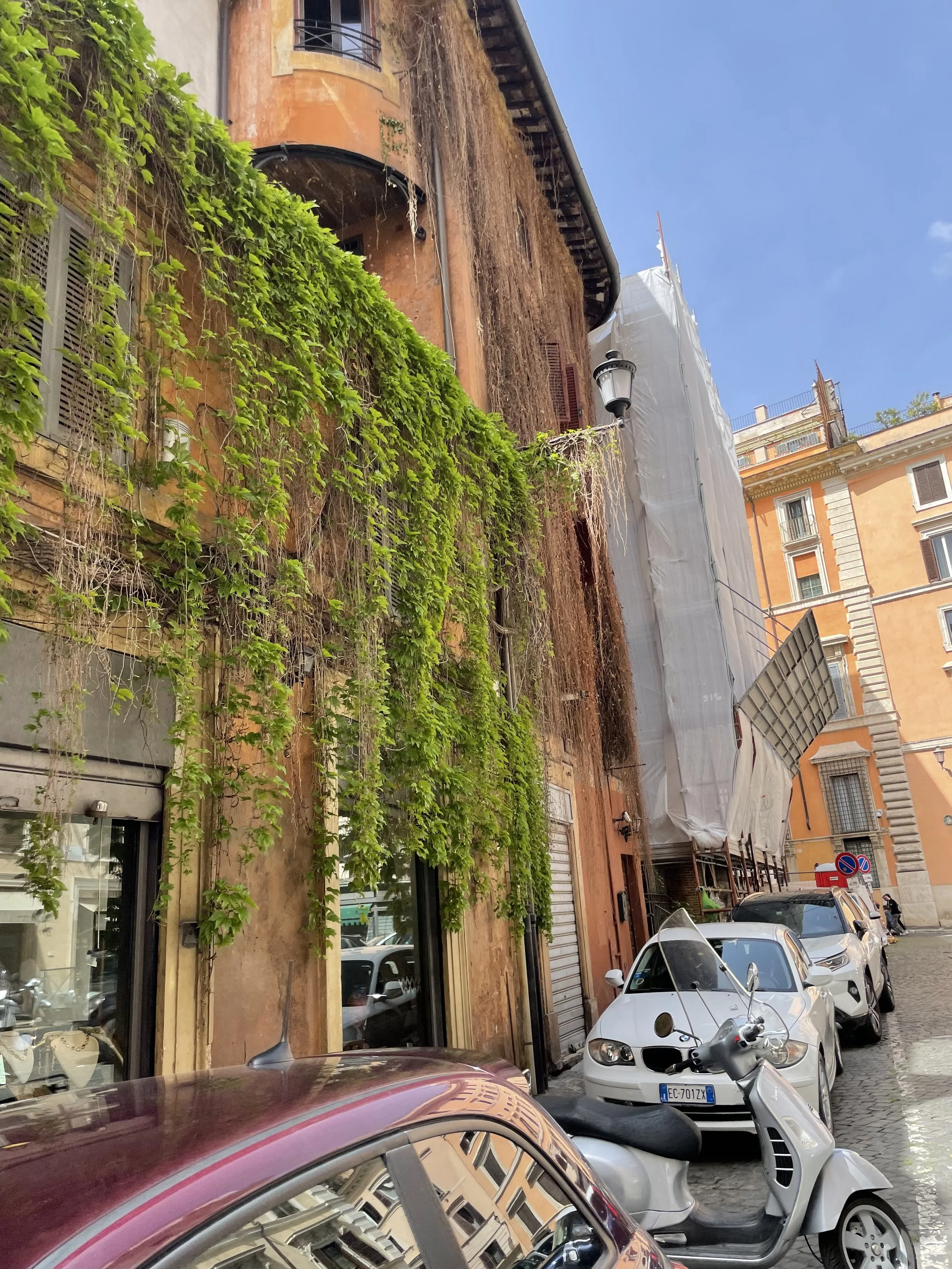
Walking slim cobblestone streets
Why Choose a Home Rental in Italy
Home rentals include city apartments, countryside villas, and agriturismi (working farms with guest rooms or apartments, which are especially popular in Tuscany). This is where you get to feel like you live there for a few days.
What I love about home rentals:
Space: separate bedrooms, a living room, and somewhere for the adults to hang out after the kids go to bed.
A kitchen: shop the local market, make breakfast on your own schedule, and swap a dinner out for a night in.
Laundry: if you've ever traveled with small kids, you already know why this is on the list. A washing machine means you can pack half as much. Be aware that dryers are very uncommon, so expect to hang-dry clothing.
Better value for groups: split between two or three families, a villa often costs less per person than a stack of hotel rooms.
The experience: a pool overlooking the vineyards in Tuscany or a terrace above the rooftops in Rome is the kind of thing your family will talk about for years.
What to watch out for:
Check-in logistics: many rentals require you to meet the host at a set time to get the keys, which can be tricky when trains run late. Also, many hosts speak English, but if they are local, they may not.
Stairs and no elevator: very common in older buildings, and not fun with suitcases, strollers or grandparents.
Air conditioning isn't guaranteed: always confirm it, especially for summer trips. Expect individual room air conditioners, not central air.
Minimum stays: many countryside villas book Saturday to Saturday in peak season.
Nobody to call: if the Wi-Fi goes down or the hot water stops working, you're waiting on a host instead of walking to the front desk.
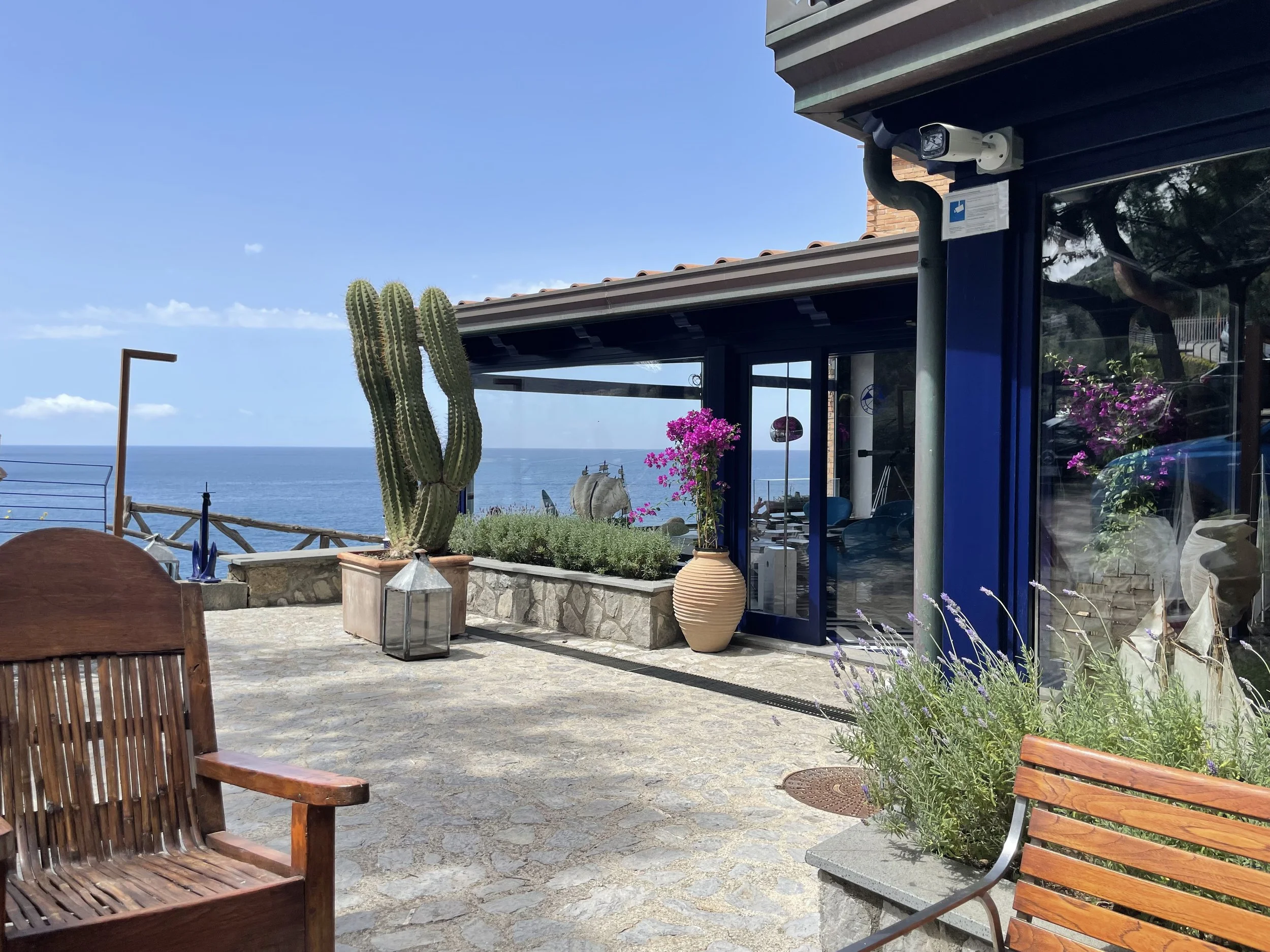
Cliffside reception area
My Experience With Both
On our way to the Amalfi Coast, I booked two nights at a coastal hotel in Vico Equense where every room had a private terrace and plunge pool right up against the sea. After days of touring the big cities, we checked in, got walked down the cliffside path to our room by the concierge, and spent the next two days between the spa, the infinity pools, and our terrace. It was heaven on earth, and exactly the kind of rest a great hotel does best.
On a more recent trip, we brought my in-laws for a multigenerational Italian adventure. With four adults and two kids, hotel options were limited, so we booked three-bedroom rentals in each destination. The extra space, a kitchen for nights in, and a washing machine made the whole trip so much more manageable. The only catch was that our "first floor" rentals were one floor above ground level in Europe, with no elevator and a gorgeous marble staircase that the grandparents cursed every time we headed out.
If a friend asked me which to book, I'd say a hotel when you want to be taken care of, and a rental when the whole family is coming along. Just ask about the stairs first.

Private plunge pool at Capo La Gala in Vico Equense
When the Decision Is Already Made for You
Sometimes you don't actually have to choose, because your trip has already chosen for you. Here are the four things that usually settle it.
Party size
If you're traveling as a couple or a family of three, hotels are easy. Once you get to five or more people, especially on a multigenerational trip with grandparents and kids, a home rental almost always wins. Everyone gets their own space, and you're not spread across three hotel rooms on different floors.
Budget
For couples, a well-located hotel and a city apartment often come out close in price, and the hotel includes breakfast and service. For groups, the math usually flips in favor of a rental, especially once you factor in the meals you'll cook at home. Just remember to add in the cleaning fee and the local tourist tax so you're comparing the full cost.
Location
Where you're staying makes a big difference. In Venice and Florence, I lean toward hotels because of the location, the help with luggage, and the short stays. In the Tuscan countryside, a villa or agriturismo is the whole point. On the Amalfi Coast and in Cinque Terre, many of the best options are small guesthouses and apartments built into the hillside, so you're often getting a little of both.
Seasonal availability
The best summer villas can book up close to a year ahead, and many of them require week-long stays. On the other end, a lot of hotels on the Amalfi Coast close for the winter. Shoulder season (spring and fall) gives you the most choice in both categories, which is one more reason I love it for Italy.
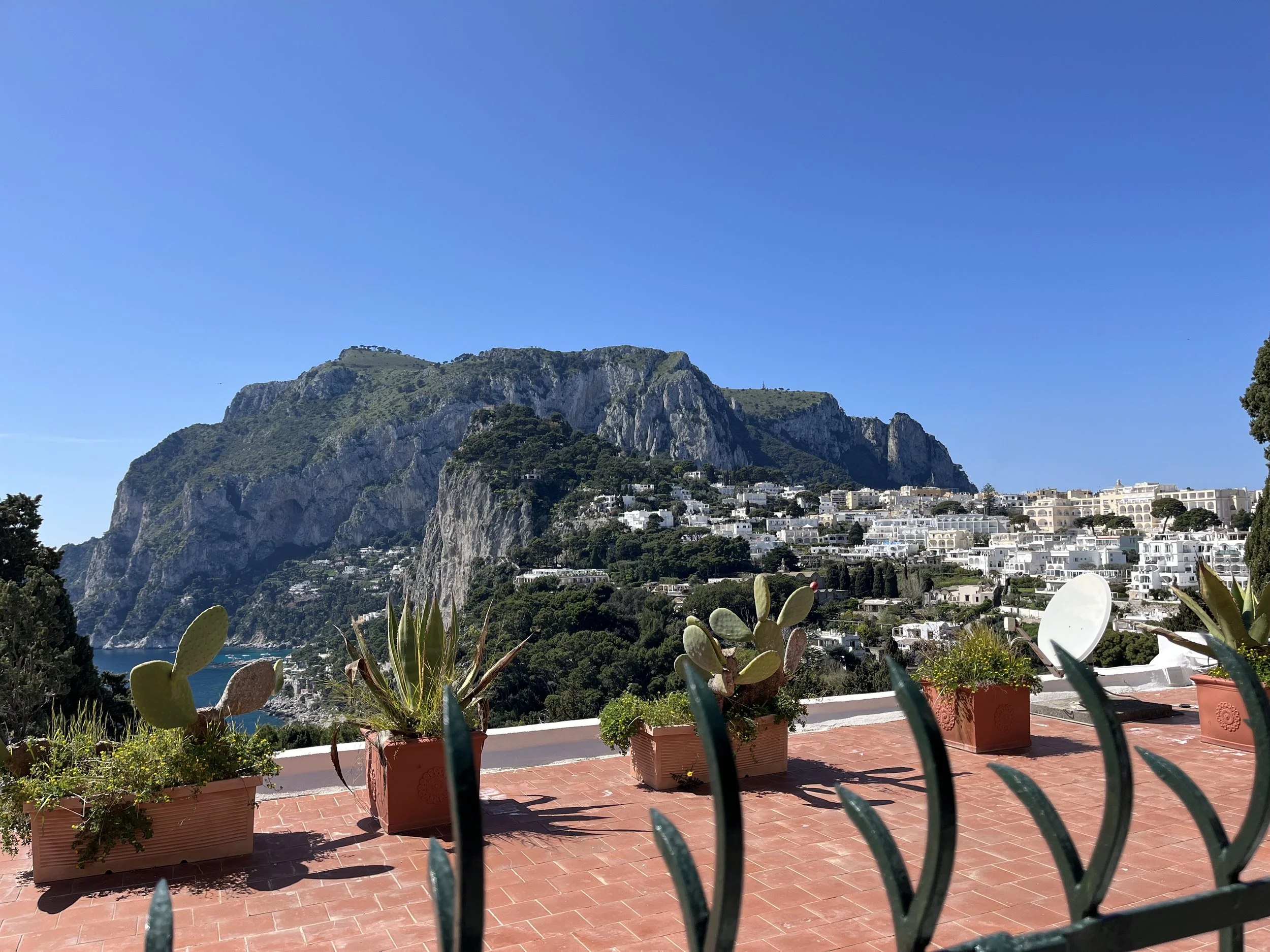
Rooftop of rental home on the island of Capri
You Don't Have to Pick Just One
Some of my favorite Italy trips use both. A hotel for three nights in Rome, where you want location and help getting around, followed by a villa or farm stay in Tuscany, where you want space to spread out, cook a slow dinner, and let the kids run around outside. You get the best of each without having to give anything up.
Finding the Right Place to Stay in Italy
I won't say there's one right answer here, because it depends completely on who's coming and what kind of trip you want. What I can tell you is that the right place to stay can make an Italy trip feel easy, and the wrong one can make every morning a little harder than it needs to be.
If you'd like help figuring out where to stay in Italy for your group, I'd love to help you find the places that fit your people, your pace, and your budget.
