Planning Your First Trip to Italy: Where to Start (Without Losing Your Mind)
If you are planning your first trip to Italy, I can guess what your phone looks like right now: too many open tabs, a Pinterest board called "ITALY!!!" with 200 pins, three different itineraries from three different blogs that all disagree with each other, and a partner or best friend who keeps sending you reels of every trending restaurant, like you’re going to book 30 reservations.
I know, because Italy is the destination I get asked about more than any other. Families, couples, girls trips, grown kids planning a bucket list trip for their parents (which is exactly how my fourth trip happened). Italy is a destination that everyone can love, and more often than not, will want to return time and time again.
Here's the thing nobody tells you about planning your first trip to Italy: it isn't hard because Italy is complicated, or because planning a trip abroad should be intimidating. It's hard because there are too many good options and nobody tells you which ones to skip. So let's walk through it the same way I would with a client, one decision at a time.
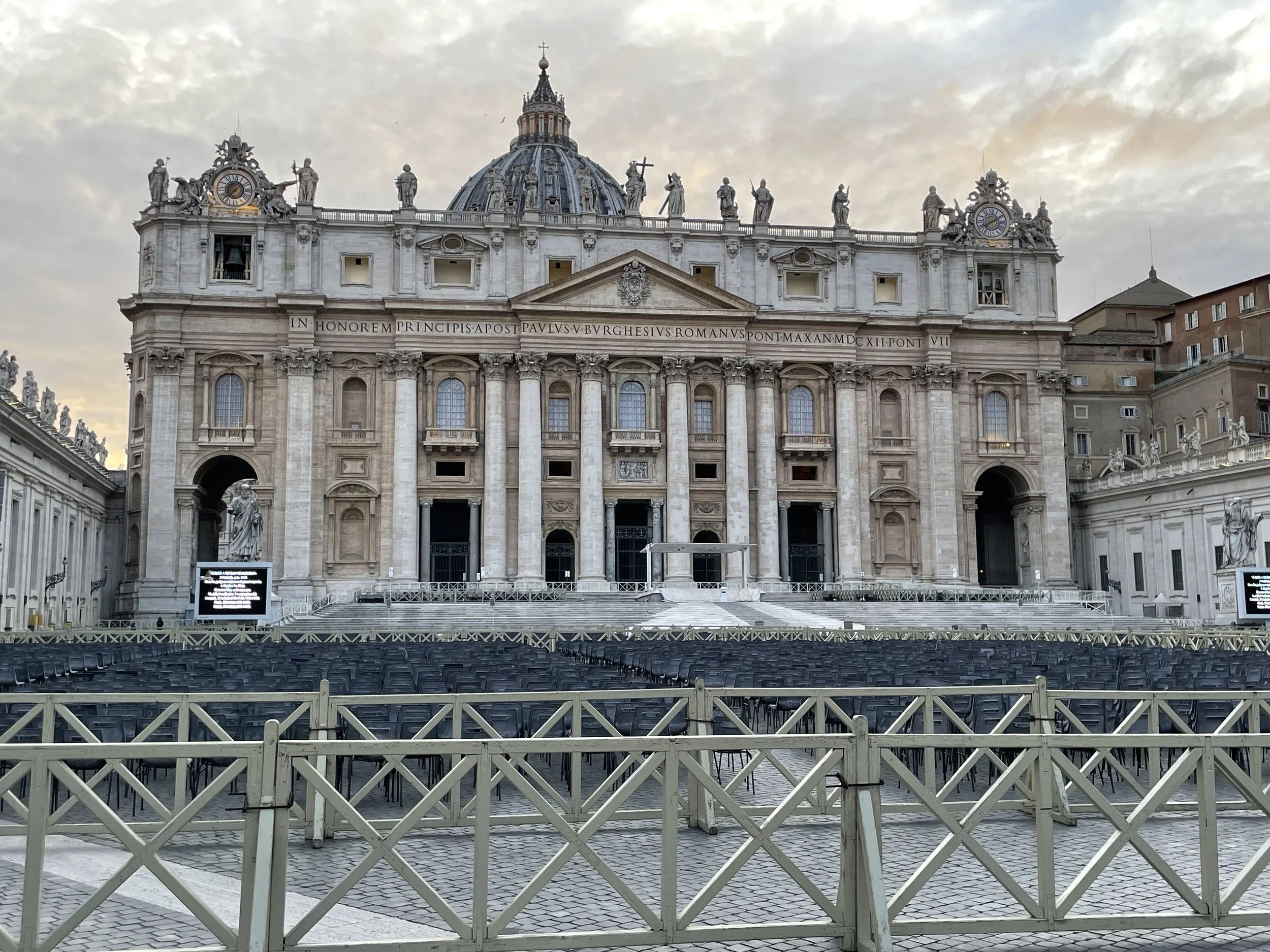
St. Peter’s Basilica in Rome, Italy
Step 1: Pick When You're Going (Shoulder Season Is Your Best Friend)
Most first-timers default to summer because that's when school is out and vacation days feel easiest to take. I completely understand, and sometimes you don’t have flexibility in timing. But summer in Italy means the biggest crowds of the year, the highest hotel rates, and heat that could fry an egg on the cobblestone.
If you have the ability to choose your timing, look to shoulder season:
Spring (April through early June): Flowers everywhere, comfortable walking weather, and the coastal towns are waking up for the season. Easter week can get busy in Rome, so if it’s not intentional, plan around it.
Fall (mid-September through October): The sea is still warm, the summer crowds have thinned out, and it's harvest season in Tuscany, which means grapes, olives, and truffles.
Traveling in shoulder season usually means better hotel rates, easier reservations at the restaurants you've wanted to try, and shorter lines at the big sights. One thing to keep in mind: many hotels and ferries on the Amalfi Coast slow down or close completely from roughly November through March, so if the coast is on your list, stick to spring or fall.
If summer is the only time that works for your family, that's okay too. You'll just want to book earlier, plan sightseeing for the morning, and build in an afternoon break (which the Italians already do).
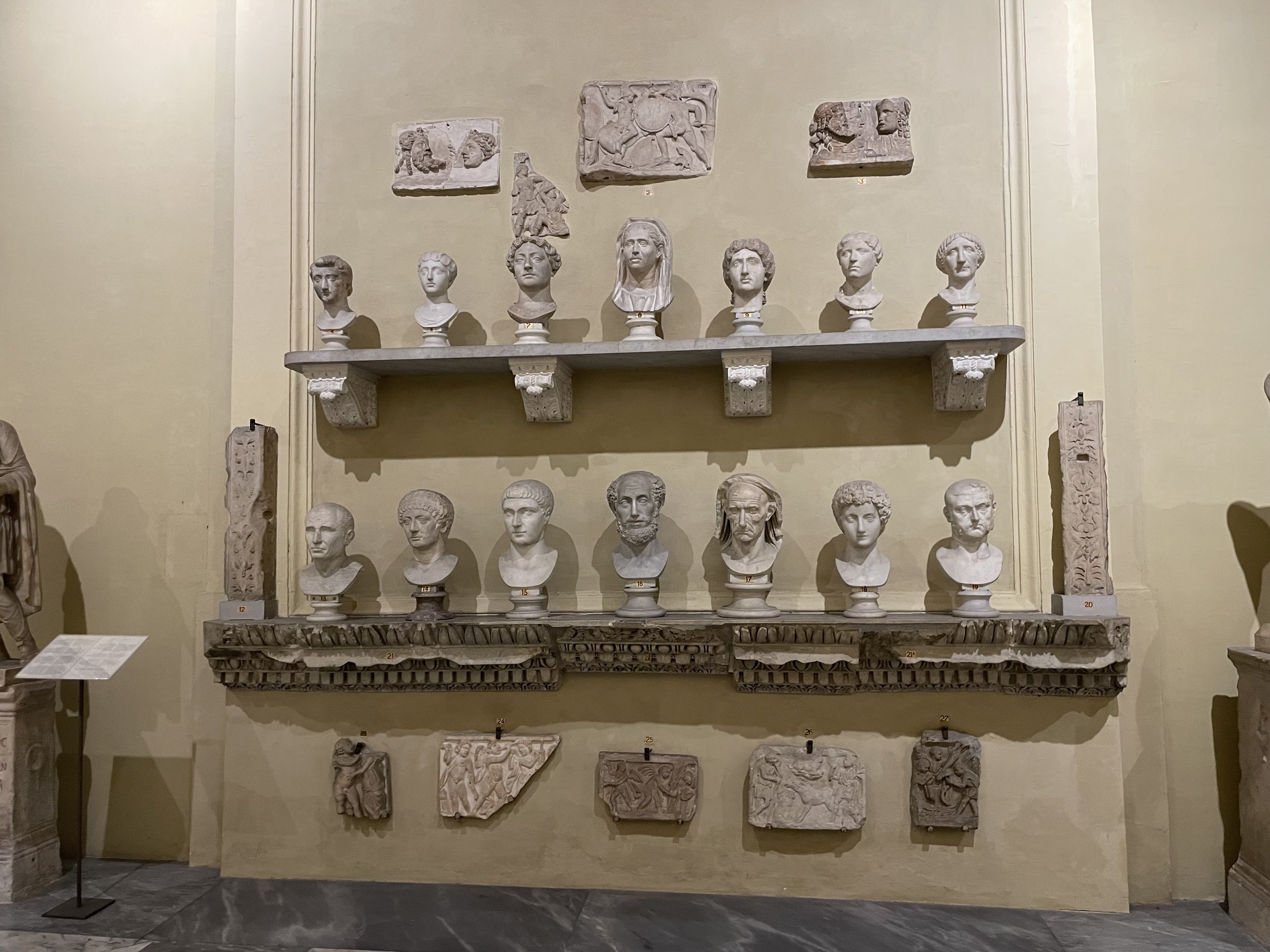
The room of busts in the Vatican Museum
Step 2: Choose the Region That Fits What You Love
Italy is not one trip. It's about twenty different trips depending on which region you choose. For a first visit, most US travelers are choosing from what I call the ‘big five’. Rather than trying to see all of them, pick the two or three that match what you actually love to do on vacation.
Rome: Best for history lovers and first-timers
The Colosseum, the Vatican, the Pantheon, and ancient ruins at every turn. Rome is the easiest place to start because it has the biggest international airport and connects to almost everywhere by train. It's busy and loud and a little chaotic, and that's part of the charm.
Florence and Tuscany: Best for food, wine, and art
Florence gives you Renaissance art, leather markets, and some of the best food in the country, all in a city you can easily walk. Pair it with a few nights in the Tuscan countryside at a farm stay (called an agriturismo) and you get the rolling hills, cooking classes, and long lunches that people picture when they hear "Italy."
Venice: Best for romance and once-in-a-lifetime views
There's nowhere else like Venice. No cars, just canals, boats, and tiny bridges. My strong opinion is that you need to stay overnight. Day-trippers flood in mid-morning and leave by dinner, and Venice in the early morning and evening is a completely different (and much quieter) city.
The Amalfi Coast: Best for beaches, views, and relaxing
Positano, Amalfi, and Ravello are built right into the cliffs above the water, and Capri is an easy boat day away. This is where you slow down. Fair warning: the roads are narrow and winding, and the towns are full of stairs, so it's a better fit for travelers who don't mind lots of hilly walking.
Cinque Terre: Best for hikers and active travelers
Five colorful villages on the coast, connected by train and hiking trails. It's absolutely beautiful, but it's also steep, and rolling a big suitcase up those streets is not something I'd wish on anyone. Pack light if this one makes your list.
Still not sure which one is for you? Think about your favorite vacation day ever. If it involved a museum, start with Rome or Florence. If it involved a long dinner and a bottle of wine, Tuscany. If it involved doing absolutely nothing by the water, the Amalfi Coast.
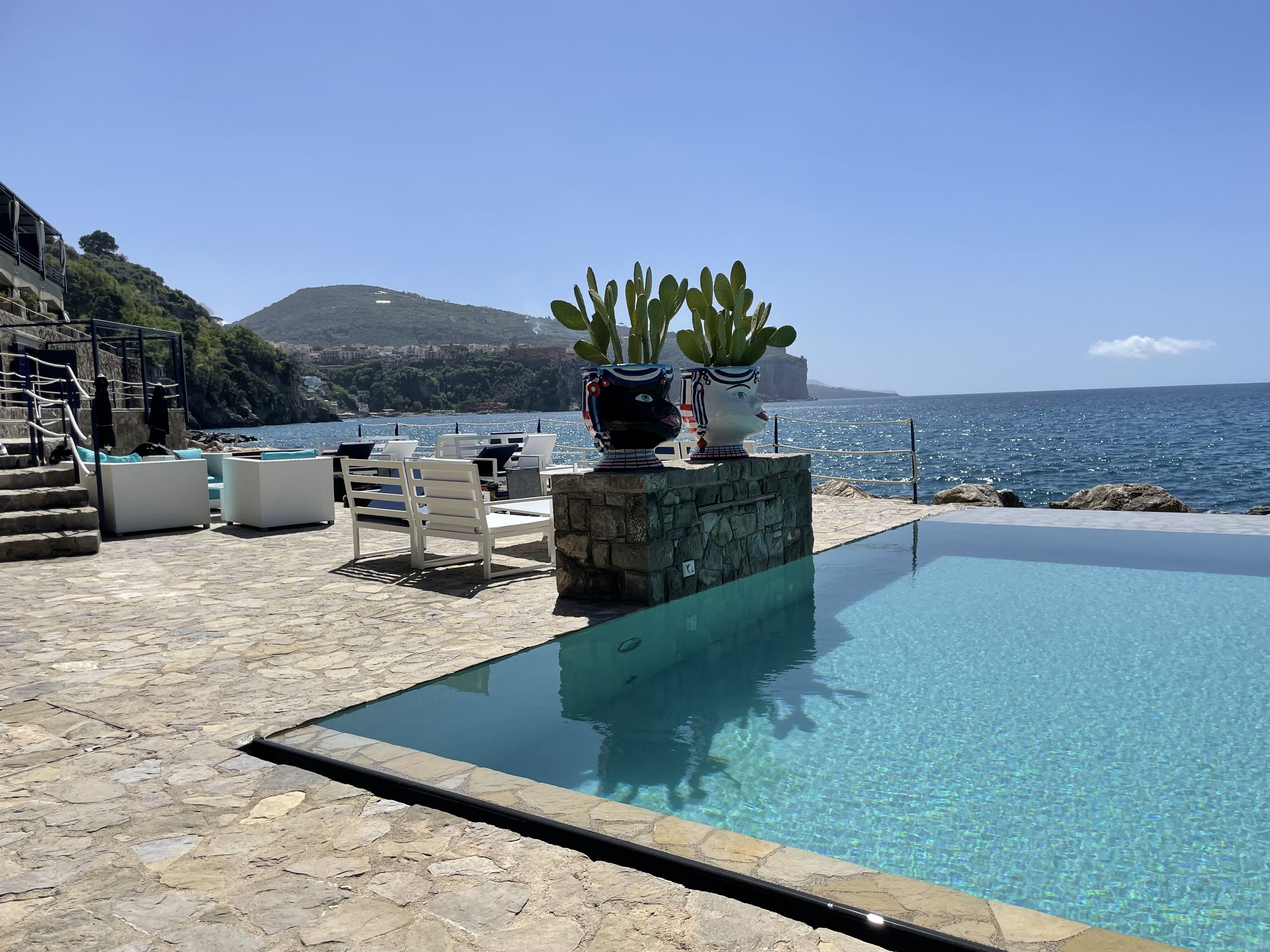
Infinity pool overlooking the sea at Capo La Gala in Vico Equense, Italy
Step 3: Build Your Route (and Give Every Stop at Least 3 Nights)
This is where most first Italy itineraries go wrong (including my very first one). I see it all the time: six cities in eight days, a different hotel every night, and a trip that ends up being mostly train stations and living out of suitcases.
My rule is simple: at least three nights in every place you stay. Three nights gives you two full days on the ground, which is enough time to see the highlights, have a slow morning, and still feel like you actually experienced the place instead of just passing through it. You can always add day trips from your base (Pompeii from the Amalfi Coast, Siena from Florence) without packing up and moving.
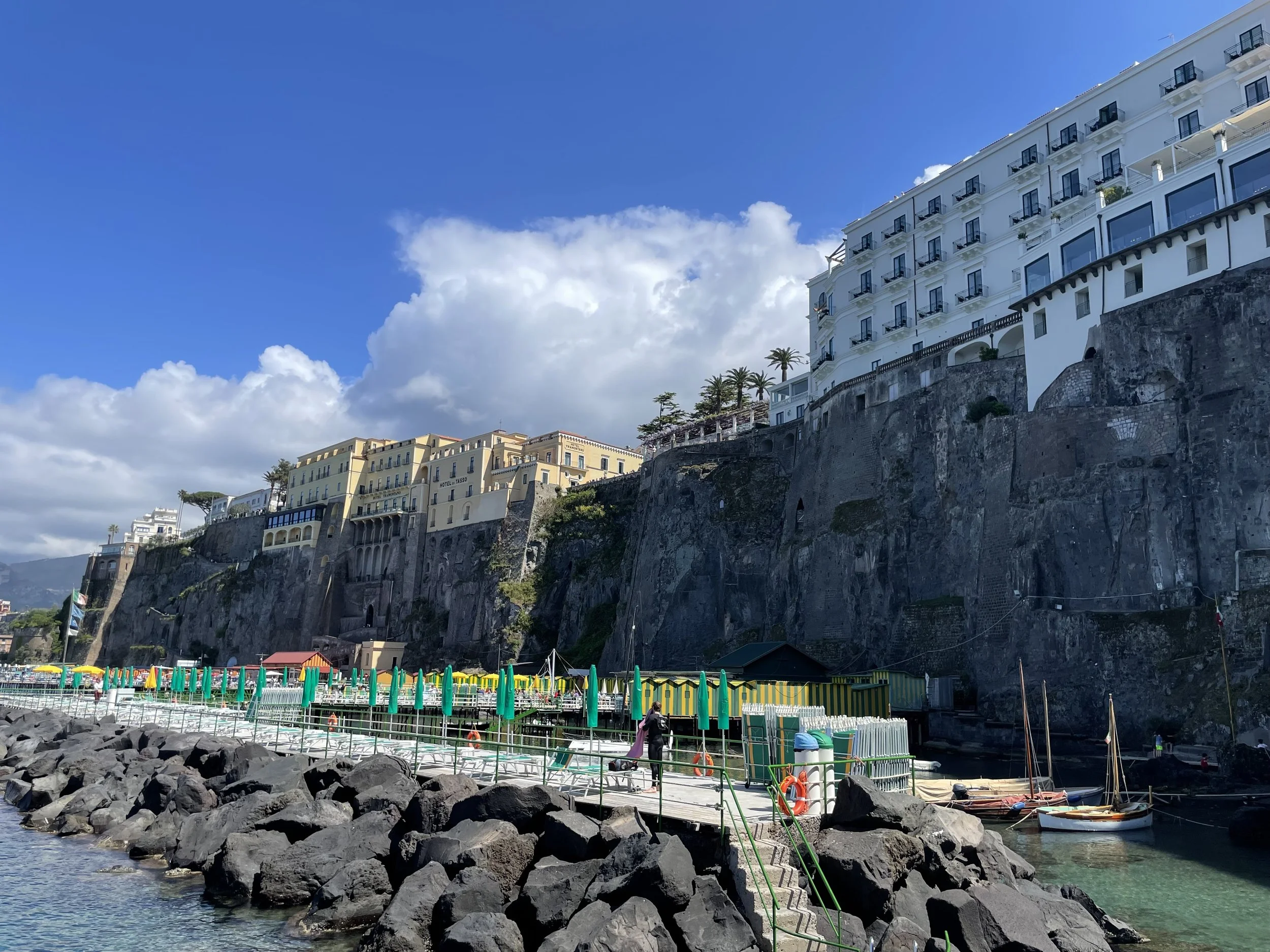
The cliffs and sun loungers in Sorrento, Italy
A few more tips for building your route:
Fly into one city and out of another. An "open jaw" flight (into Venice, out of Rome, for example) saves you from backtracking across the country on your last day.
Follow the train lines. Rome, Florence, and Venice are all connected by high-speed trains, which makes them an easy first-trip combination. Book ahead for best times and prices.
Put your most relaxing stop last. Ending on the coast or in the countryside means you fly home rested instead of exhausted.
Step 4: Plan a Trip You Love That Also Fits Your Budget
The best Italy trip is not the most expensive one. It's the one where you spend your money on the things that matter most to you and don't feel stressed about the credit card bill when you get home. A budget is not a limit on your trip, it's a way to make sure the trip feels good from start to finish. Here's where your choices make the biggest difference.
Hotels
Italy has everything from five-star palazzos to family-run guesthouses, and you don't need the same level of hotel in every city. You can splurge on one special stay (a room with a view in Positano, a villa in Tuscany) and choose a comfortable, well-located boutique hotel everywhere else. Location matters more than a fancy lobby, because a great neighborhood means less time and money spent on taxis. Also keep in mind that Italian cities charge a nightly city tax that's paid at the hotel, so plan for it.
Transportation
For most first trips, trains are the easiest and most budget-friendly way to get between cities. High-speed trains are fast and comfortable, and booking ahead usually gets you a better fare. Private transfers cost more but are worth it in a few places, like getting from Naples to the Amalfi Coast with kids and luggage. I generally steer first-timers away from renting a car for the cities, since many historic centers have restricted driving zones that come with fines, but a car can make sense for a few days in the Tuscan countryside.
Activities
Decide which experiences you'll remember for the rest of your life, and put your money there. That might be a private guide at the Vatican, a cooking class in Tuscany, or a boat day to Capri. Then balance those with free and low-cost days: wandering neighborhoods, picnics, sunset walks, and gelato stops (the most important, according to my daughter). Small-group tours are a great middle ground between a private guide and doing it on your own.
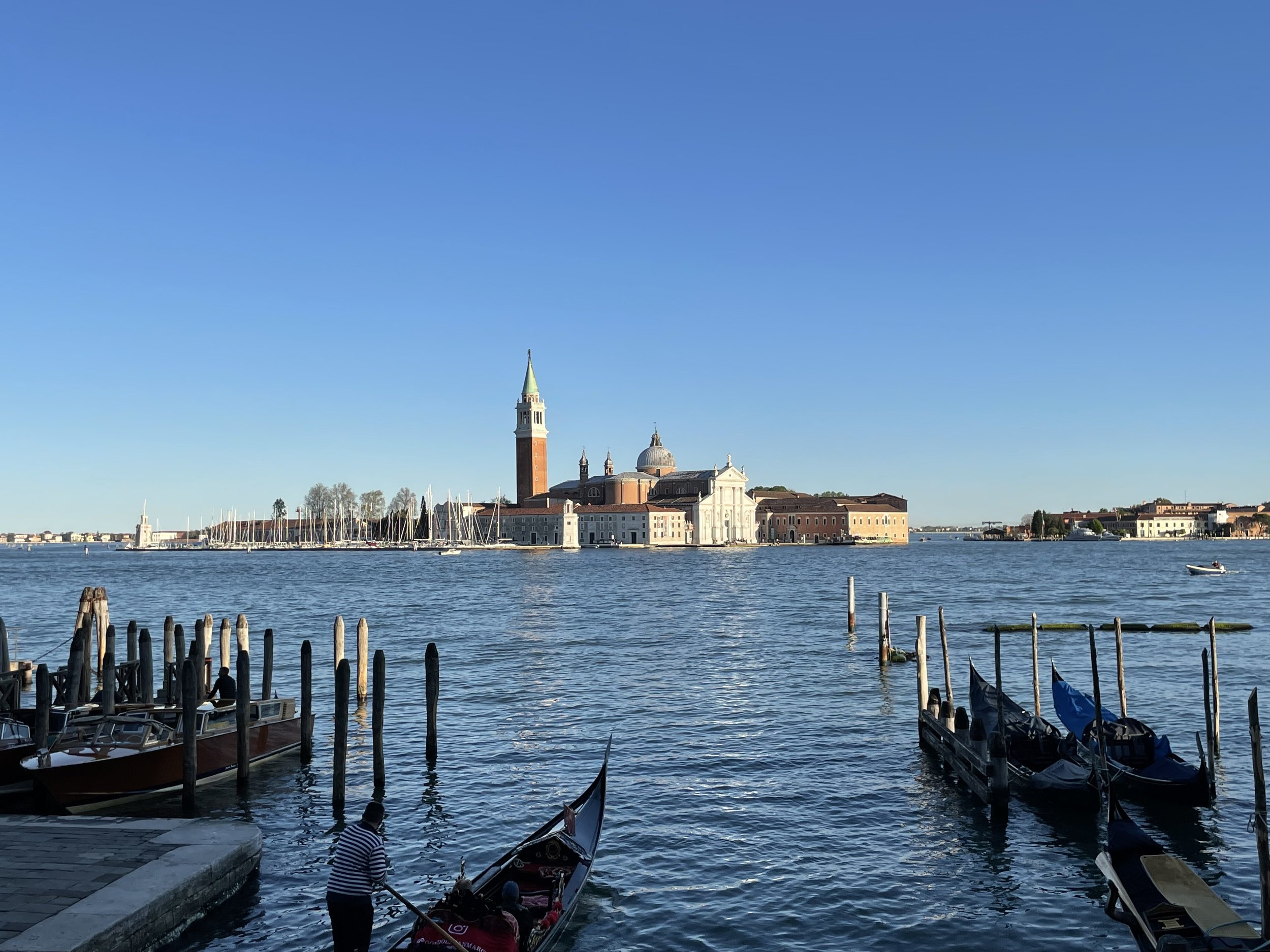
Views of Borano from Venice, Italy
Your First Trip to Italy Checklist
Check your passport: make sure it's valid at least 6 months beyond your travel dates.
Pick your season: spring or fall if you can swing it.
Choose 2 to 4 home-bases: based on what you love, not what's trending.
Give every stop at least 3 nights: your future self will thank you.
Book timed tickets early: the Vatican Museums, the Colosseum, and The Last Supper in Milan can sell out.
Book trains and transfers: once your route is set. For ease of ticketing, download the train apps as well.
Set your budget priorities: where you'll splurge and where you'll save.
Get travel insurance: it can cover almost every aspect of your trip, not just flights!
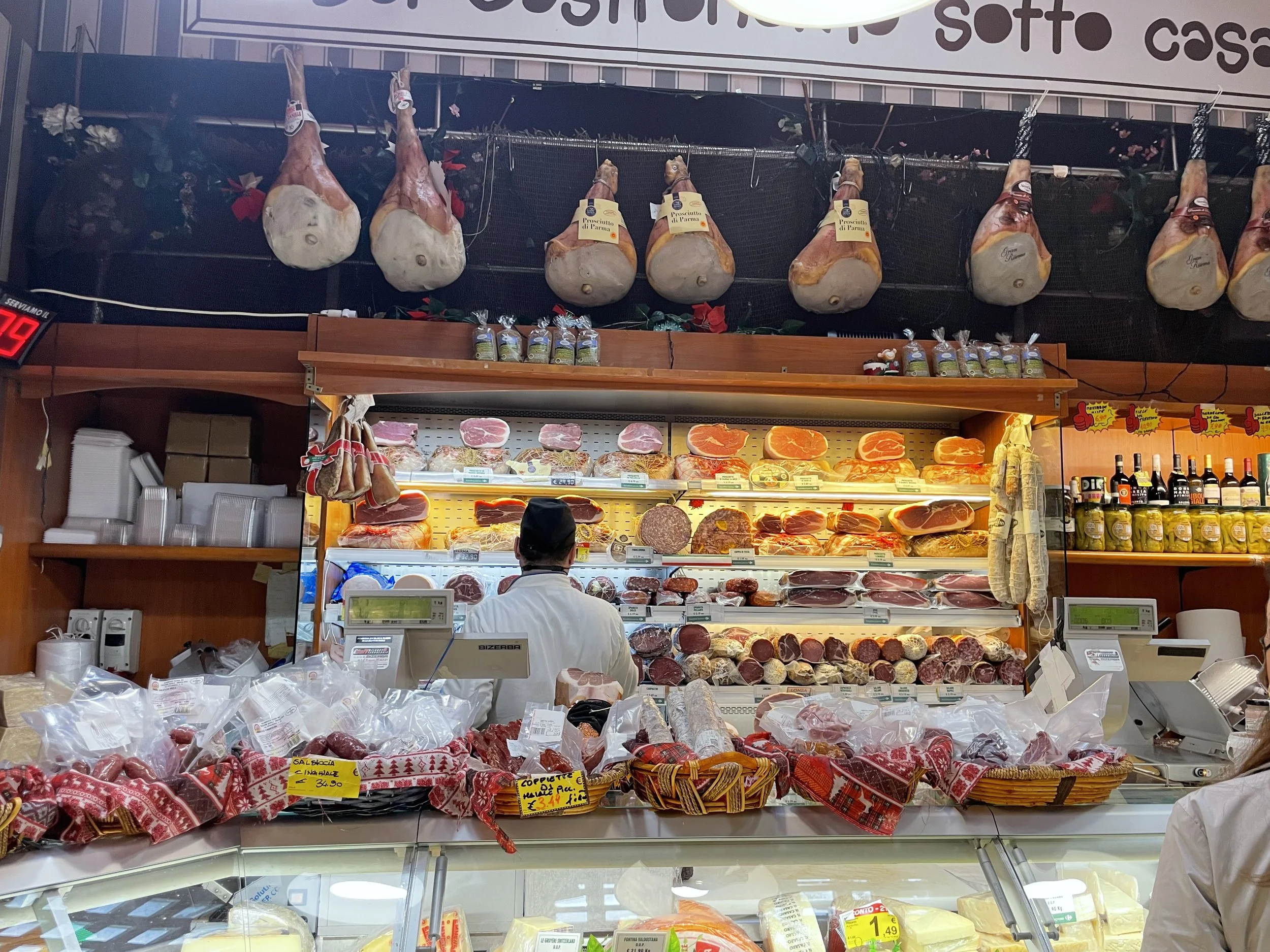
Deli counter at a market in Rome, Italy
Frequently Asked Questions About Planning Your First Trip to Italy
How many days do you need for your first trip to Italy?
Ten days is my sweet spot for a first trip. It gives you enough time for three bases with at least three nights each, without feeling rushed. My first trip was eight rushed days, and I wouldn’t build that itinerary the same again. We left feeling tired, but knowing we had to come back!
What is the best month for a first trip to Italy?
May and late September through October are usually the best balance of weather, crowds, and hotel rates. Both give you warm days without the peak summer heat and prices. If you’re forced to work around school schedules try for early June, but book 8-12 months in advance.
Is it better to take the train or drive in Italy?
For cities, take the train. Italy's rail network connects the major cities quickly, and you avoid parking and restricted driving zones. A rental car is most useful in the countryside, like Tuscany, where small towns are spread out. Keep in mind that you may require an international driving license.
Should I use a travel advisor to plan my trip to Italy?
You can plan Italy yourself, and plenty of people do. An advisor is most helpful when you want someone to handle the routing, hotels, transfers, and timing so you don't have to, and when you want access to hotel perks and an expert to call if something changes mid-trip. A good way to judge is, if you are starting to feel overwhelmed and a little less excited about keeping track of all the details, it might be time to reach out to your friendly travel advisor.
Planning Your First Trip to Italy Doesn't Have to Be Stressful
I'm not going to pretend planning Italy is effortless, because there are a lot of moving pieces. But once you know when you're going, which regions fit you, and how long to stay in each one, the rest starts falling into place. And the moment you're sitting at a little café table with a cappuccino and nowhere you need to be, every bit of planning will feel worth it.
If you'd rather hand the planning off to someone who loves this part, that's exactly what I do. You can reach out and tell me who you're dreaming of taking to Italy. I'd love to help you plan a trip that feels like yours.
